Debunking Myths and Misconceptions about Hair Transplantation in Nepal
Mar 13, 2023
If you are here, you must be someone who's been struggling with hair loss and looking for a way to restore your hairline. You are probably considering hair transplant but are hesitant due to the myths and misconceptions surrounding the procedure. Don't worry, you're not alone. Many people are misinformed about hair transplants, which can lead to confusion and doubts.
Hair transplant has been a life-changing procedure for many individuals. However, it is completely understandable that hair loss can be a sensitive issue for many, and separating the facts from the fiction about the treatment can be challenging.
In this article, we will share with you some valuable insights about the myths and misconceptions surrounding hair transplants. The aim of this post is to provide you with accurate information that can help you make an informed decision about this procedure. It is intended to clear up any confusion you may have and reassure you that a hair transplant is a safe and effective option for restoring your hair.
Some Common Myths about hair transplants
1. Hair transplants are only for men
It is a common myth that hair transplants are only for men. This misconception can prevent women who suffer from hair loss from considering hair transplant surgery as a viable treatment option. However, this is just a misconception and entirely false.
Fact
Both men and women can experience hair loss due to various factors such as genetics, hormonal imbalances, and medical conditions. Hair transplant surgery can be an effective solution for anyone who wishes to restore their hair density and improve their appearance.
Although a majority of hair transplant patients are males because they suffer from the condition more than females, hair transplant surgery is not limited by gender, and the technique used in the procedure can be customized to meet the specific needs of each patient, regardless of their sex. Therefore, hair transplant surgery can be an effective treatment option for both men and women who suffer from hair loss.
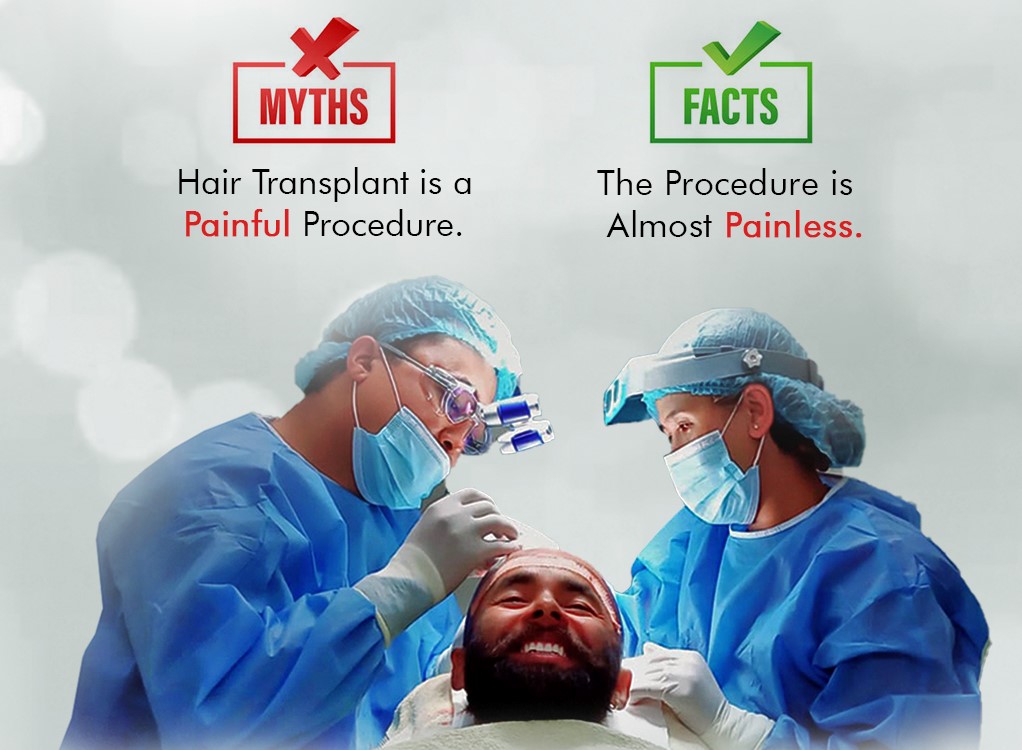
2. Hair transplants are very painful
Immense pain is another misconception about hair transplants that many people fear. While it is true that any surgical procedure can cause some degree of discomfort, modern hair transplant techniques like DHI have greatly reduced the amount of pain associated with the procedure.
Fact
Hair transplant surgery is typically performed under local anesthesia, which means that the patient is fully awake but does not feel any pain in the area being treated. Some patients may experience mild discomfort during and after the procedure, such as a slight pulling or tugging sensation, but this is generally well-tolerated and not considered painful.
After the procedure, patients may experience some mild discomfort or soreness in the scalp, which can be managed with over-the-counter pain medication.
The level of pain experienced during a hair transplant procedure can vary depending on the individual's pain tolerance and the specific techniques used by the surgeon. However, with modern hair transplant techniques and proper pain management, most patients report minimal discomfort during and after the procedure.
3. Hair transplant results are temporary
This myth that hair transplant results are temporary is entirely false. In fact, hair transplant is completely based on the concept of permanent hair restoration.
Fact
Hair transplant surgery involves transplanting healthy hair follicles from the back and sides of the scalp (or body parts like the face, chest, shoulders, etc.) to the bald or thinning areas. These hair follicles extracted from those donor parts are genetically resistant to balding, making the transplanted hair very less likely to fall out or thin over time.
It can take several months to see the full results of the procedure, but once the transplanted hair follicles start to grow, they can continue to produce hair for the rest of your life. With proper care and maintenance, hair transplant results should last a lifetime.
4. Hair transplants give instant results
The myth that hair transplant surgery provides instant results is believed by many people. They think that long hairs are picked straight out of someplace and planted on bald areas, which is way too far away from reality.
Fact
The hair transplant is not a quick fix, and you will need to be patient until the results show up at their own right time.
After the procedure, the transplanted hair follicles will enter a resting phase before starting to grow new hair. It can take several months to see the full results of the procedure, and in some cases, it may take up to a year for the transplanted hair to fully mature.
The speed of hair growth after a hair transplant can vary depending on the individual's hair growth rate and the specific techniques used by the surgeon. So, instant results immediately after the procedure shouldn’t even be thought of.
Be mentally prepared to allow time for the transplanted hair to grow and mature. Although, hair transplant surgery can not provide instant results, it can be a worthwhile investment in the long-term appearance of your hair, and thats a fact.
5. Hair transplants can stop hair fall
This is another myth that developed because many people understood hair transplants as a treatment for hair loss while it is actually a restoration of hair in bald regions.
Fact
Hair transplant surgery can provide a permanent solution for hair loss in the areas where the procedure is performed, but it cannot prevent hair loss in other areas of the scalp or body.
Hair transplant surgery addresses hair loss by transplanting healthy hair follicles from one part of the scalp (or body) to the bald or thinning areas. However, it does not address the underlying causes of hair loss.
Therefore, if you plan to undergo hair transplant surgery, you should know that you may still experience hair loss in other areas of the scalp or body. It is important for you to maintain a healthy lifestyle and manage any underlying medical conditions through other treatment methods to minimize the risk of further hair loss.
6. Hair transplants work only on young people
There is a common misconception that hair transplant surgery is only effective for young people, and that older individuals with thinning or balding hair are not good candidates for the procedure. This is totally a false spread rumor.
Fact
Hair transplant surgery has been successful for individuals of all ages, as long as they have enough healthy hair follicles on their scalp or donor areas of the body. In fact, older individuals may even be better candidates for hair transplant surgery than younger ones, because they often have a more stable pattern of hair loss and a better understanding of their long-term hair restoration goals.
That being said, there are some factors that can affect the success of hair transplant surgery in older individuals such as the overall health and condition of the scalp, the presence of any underlying medical conditions or medications that may affect hair growth, and the individual's expectations of the results.
7. Hair transplants are only for bald people
Many people think that a hair transplant should be done only after someone goes completely bald or to the ultimate stage of hair fall.
Fact
Hair transplant surgery can be effective for individuals with varying degrees of hair loss, including those with thinning hair, receding hairlines, or bald spots.
In fact, hair transplant surgery is a good option for individuals who are experiencing early stages of hair loss or thinning, as it can help to prevent further hair loss and promote the growth of new, healthy hair.
Contrary to the myth, a hair transplant can often not be a suitable option for someone who has already gone completely bald. The causes of hair loss might be unavoidable at that stage, the donor hair may be insufficient and the patient will require the maximum grafts which can make hair transplanting very expensive for him.
8. Hair transplants are unaffordable for common people
A lot of people are seen to drop the idea of restoring their hair due to the rumor that hair transplants are very expensive for them and only super-rich can afford it. This is not entirely true though.
Fact
Hair transplant surgery being a cosmetic procedure, can be perceived as a comparatively costlier procedure than other basic medical services. However, the reality is that the cost of hair transplant surgery varies widely depending on a number of factors, and it is more affordable than many people realize.
The cost of a hair transplant surgery depends on factors like the extent of the hair loss, the number of grafts required, the location of the hair transplant clinic, and the experience and qualifications of the surgeon performing the procedure. While the cost of hair transplant surgery may be significant, you should also remember that it is a one-time investment that provides long-lasting results.
Furthermore, many hair transplant clinics like Arogin Hair and Skin offer financing options like payment plans, credit lines, etc. to ease patients cover the cost of the procedure.
9. Hair transplant results do not look natural
Hair transplant surgery has come a long way in recent years, and many people still believe that the results look unnatural or "pluggy." However, this is just an unfounded myth.
Fact
The reality is that hair transplants provide natural-looking, long-lasting results when performed by a skilled and experienced surgeon using modern tools and technologies.
One of the reasons why hair transplant surgery has gained a reputation for producing unnatural results is because of outdated techniques that involved transplanting large clumps of hair in a way that looked obvious and artificial. However, modern hair transplant techniques of FUT and FUE (Bio-DHI, B.E.S.T.) involve transplanting individual hair follicles in a way that mimics the natural growth pattern of the hair.
In addition to the use of modern techniques, a skilled and experienced surgeon will take into account factors such as the patient's hairline, hair density, and facial features when planning the transplant. This helps to ensure that the results look natural and complement the patient's overall appearance.

Fig: A good hair transplant result
10. Hair transplant procedure affects the brain
There is a false assumption that hair transplant surgery has negative effects on the brain, such as affecting memory or causing prolonged headaches. There is no scientific evidence to proves that a hair transplant affects the brain.
Fact
Hair transplant surgery is a localized procedure that only affects the scalp and does not involve any manipulation or alteration of the brain. The surgery involves removing healthy hair follicles from the donor area of the scalp and transplanting them into the areas where hair loss or thinning has occurred. This process does not involve any interference with the brain or nervous system, rather it is a safe and effective treatment for hair loss.
It is possible that some people may experience headaches or discomfort after hair transplant surgery, but this is a normal side effect of any surgical procedure and is usually temporary. In rare cases, there may be complications or infections associated with the surgery, but these are not related to the brain and can be managed with proper care and treatment.
11. Hair transplants can cause cancer
Hair transplant surgery is a procedure that involves some tampering with the scalp skin which has led to a misconception among people that it can cause skin cancer. But this has just remained a myth and no medical research has linked hair transplants with cancer.
Fact
Cancer is a complex disease that can have many different causes, such as genetic mutations, exposure to certain chemicals or substances, or lifestyle factors. Hair transplant surgery is a localized procedure that only affects the scalp and does not involve any exposure to cancer-causing agents or factors.
There have been some concerns in the past about a potential link between hair transplant surgery and skin cancer, but this has been largely debunked by scientific research. It is true that transplanted hair follicles may be more susceptible to sunburn and skin damage, but its not enough to increase the risk of developing skin cancer.
Any surgical procedure carries some risks, and hair transplant surgery is no exception. Possible complications may include infection, scarring, or an adverse reaction to anesthesia. However, these risks are generally low and can be minimized with proper care and monitoring.
12. Hair transplants restore your hair to its original density
Hair transplant surgery is an effective hair restoration technique, but it is a misconception that it is always supposed to restore your hair to its original density before the hair fell out.
Fact
It is possible for a hair transplant to achieve a similar density to your original hair, but it is not always guaranteed.
Hair density is determined by genetics, and a hair transplant can only restore hair in areas where donor hair is available. The amount of donor hair available can be limited, especially if the patient has advanced hair loss. This means that the hair transplant surgeon must be careful not to over-harvest hair from the donor area, and a good surgeon knows this very well.
Additionally, hair transplant surgery may require multiple sessions to achieve the desired level of density. Each session adds more hair to the transplant area, but it will take several sessions to reach the desired density.
13. You should take a long leave from work for a hair transplant
Another common myth about hair transplants is that you will have to take a long leave from work to recover from the procedure.
Fact
You will need to take some days off work to allow for healing, but the amount of time required varies depending on several factors.
For example, the type of hair transplant procedure you undergo will play a role in determining how long you will need to take off work. With the Follicular Unit Extraction (FUE) technique and its modifications like DHI, recovery time is usually faster than with the Follicular Unit Transplantation (FUT) technique.
If you only have a small area of your scalp treated, you should be able to return to work within a few days. However, if you have a larger area treated, you may need to take more time off work to allow for healing. In general, most people are able to return to work within 5-7 days after a hair transplant procedure.
14. Hair transplants are done with someone else’s hair
Some people misunderstand the term "donor" used in hair transplant and assume that it refers to getting hair from someone else, which is not the case in reality.
Fact
Hair transplants involve transplanting hair follicles from one part of the body, called the donor area( usually the back and sides of your own head), to the balding or thinning area, called the recipient area.
This means that a hair transplant does not involve using someone else's hair, but rather the patient's own hair. As a result, the transplanted hair will blend seamlessly with the patient's natural hair and look completely natural.
This is an important fact to clear up any confusion or misconceptions about the hair transplant process.
Sum-Up
By the factual realization of how these myths have developed and spread among people you can now make an informed decision about your hair transplant journey. If there are any other misconceptions, confusions or queries that you cannot be sure of, you can book your consultation at Arogin Hair and Skin.