Get Effective Hair Transplant in Nepal: Arogin Health Care - A Complete Guide to Hair Transplant Techniques
Mar 13, 2023
A hair transplant is the best solution for hair loss, baldness, or alopecia which scientific studies from around the globe have proven over the years.
The problem of hair loss has been there forever, and people search for the solution to it every day on the internet (so you are not the only one). Hair loss is a common byproduct of aging but it doesn't spare young people too. Losing your hair in your 20s, 30s, and 40s can be very frustrating. Although it doesn't have any physical effects, baldness or having thin hair can affect your self-esteem, confidence, and overall psychological health.
Causes of hair loss
Hair loss can be due to one or multiple of the following reasons:
- Heredity
- Hormonal changes/ imbalance
- Medical conditions
- Nutrient deficiencies
- Chemical treatments on hair
- Stress
- Injuries from burns, accidents, surgeries, etc.
The most common cause of hair loss that is quite normal with aging is Androgenetic Alopecia which is also called genetic hair loss in simple words. A hair transplant is the perfect solution for this particular hair loss.
The science behind genetic hair loss
Genes that control the sensitivity of hair follicles to androgen hormones are responsible for the development of androgenetic alopecia (genetic hair loss). Dihydrotestosterone (DHT) is the androgen hormone associated with hair loss.
DHT is produced from testosterone by the action of an enzyme called 5-alpha reductase. DHT binds to receptors in hair follicles, which triggers a process known as miniaturization. This process causes the hair follicles to shrink over time, producing progressively thinner and shorter hairs and eventually leading to the complete cessation of hair growth.
Hair loss has been a headache for centuries, but with the development of natural hair transplants, now we have the most advanced and permanent solution to hair loss. Yes, hair transplants are “completely” natural. After full regrowth of transplanted hair, you can do anything with it that you would do with your natural hair. It can be trimmed, you can shampoo it, and you can even dye it if you like it colorful. Swim, dance, play your favorite sport, and travel in any climate without worrying about your hair.
What is a hair transplant?
A hair transplant is a surgical procedure that involves the extraction of hair follicles from a region with thicker hair and then implanting them into the region with thin or no hair. The hair is transplanted in the form of grafts.
Generally, the back and sides of the head are the regions with thicker hair called the donor area. The front and top(crown) of the head commonly suffer from hair loss. They are called the recipient zones.
Hair can also be extracted from other parts of the body such as the beard, back of the shoulders, chest, abdomen, pubic region, and legs if required.
What is a graft?
A graft is a strip of skin with 1 to 4 hair follicles. It is extracted from the donor site and implanted into the recipient site in hair transplantation.
What is a hair follicle?
A follicle is a tunnel-shaped opening in the skin through which hair grows. Simply, you can understand that one graft of hair results in an average of 2-3 new strands of hair through the follicles.
What concept is hair transplant based on?
Hair transplant is based on the principle of donor dominance i.e. the transplanted hair retains the properties of the donor site. So, understand that the transplanted hair on the front and crown of the head will remain as long as the hair remains in the donor site, ideally for a lifetime.
When was the hair transplant technique started as a solution to hair loss?
The development of the hair transplant technique as a solution for hair loss started in the early and mid-20th centuries. Different methods were tested in Japan, America, and Europe in the early days of hair transplant surgeries. In the coming decades, many shortcomings were corrected, side effects were neutralized, and many modifications were made for an effective, safe, and affordable surgical procedure for hair restoration. As a result, hair transplantation is in its most advanced form at present.
When did hair transplants start in Nepal?
In Nepal, hair transplants started in the early 2010s. This technology got attention of the common Nepalese people right from the start through its shocking hair restoration results. Tired of wearing wigs and hats to cover their baldness, the people soon turned towards hair transplant as a permanent solution to hair fall problems, and it didn’t disappoint the patients at all. At first, dermatologists and health care/cosmetic clinics began their service in Kathmandu. With its growing popularity among the people, the hair transplant technique has now flourished in other major cities of Nepal like Biratnagar, Pokhara, Dharan, Butwal, Chitwan, Dhangadhi, etc.
Where is Arogin in the hair transplant scenario of Nepal?
Arogin Health Care and Research Centre is one of the pioneer medical institutes that has provided hair transplant surgeries to thousands of grateful patients. Highly qualified, specially trained, and long-experienced dermatologists perform the surgery here at a most reasonable price. The process starts with a detailed examination and free consultation for your hair loss condition. “Patient care comes first” is the key mantra of Arogin.

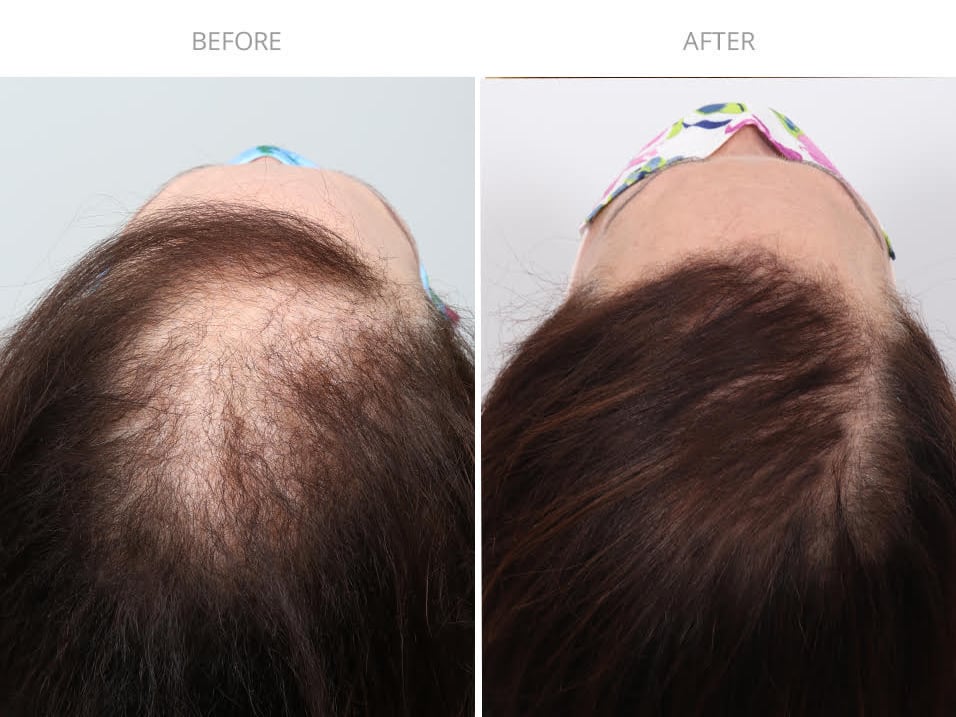
FIG: Hair Transplant in Arogin
Although hair transplant is a simple procedure, it is a sensitive subject to pull off the existing hair from a site and planting new hair in the bald scalp. Any carelessness can lead to further hair loss or the transplants not functioning well. It's certain that a failed transplant will adversely affect the patient’s lifestyle, and the time and money of the patient will go down the drain. So, before you go for a hair transplant, you should be wise enough to find a specialized and well-experienced dermatologist.
How is a hair transplant done?
The basic procedure of hair transplantation can be simply explained as - the extraction of pieces of skin with hair from one part of the scalp and grafting them onto the areas of hair thinning or baldness. There are various methods of hair transplantation, all based on this same concept but following different procedures.
Types of hair transplant methods
There are mainly two types of hair transplantation techniques categorized based on their method of extraction of grafts:
- Follicular Unit Transplant (FUT)
- Follicular Unit Extraction (FUE)
There are various methods with names other than the two above, like IHT( Immediate Hair Transplant) or DHT (Direct Hair Transplant), NeoGraft Hair Transplant, etc. These are modified forms of FUE. All methods have the same purpose, which is the restoration of hair. However, the procedure and cost vary.
How do I choose a specific hair transplant method?
The appropriate hair transplant method for you depends on various factors such as:
- the number of grafts required,
- the thickness of your scalp skin,
- time constraints,
- budget limitations,
- whole body health and medical history,
- pain tolerance of your body, etc.
You and your medical doctor can review all relevant conditions and decide which method of transplant will be the best suited for you.
Let's understand the types of hair transplants in detail.
What is the FUT method of hair transplantation?
Follicular Unit Transplant is a method of hair transplant that involves the extraction of a strip of skin from the donor area, which is further cut into fine grafts and implanted into the hairless region.
The whole procedure of FUT is summarized in the following steps.
- Anesthesia is given on the sides and back of the head, which numbs the skin, and minimizes the pain of the cut
- A strip of skin with hair is removed from the back of the head
- The donor site from where the strip is extracted is sutured (stitched), so that the hair continues to grow through the scar
- Then the strip is cut/slivered further under the microscope to harvest individual grafts to be implanted in the bald / hair loss area
- Those grafts are then implanted into the incisions made in the recipient area.
- The procedure takes between 4-12 hours, depending upon the size of the area of treatment
Some facts about FUT:
-
The strip and then the grafts remain outside the body for a long time-4/5 hours while it undergoes preparation for implantation. So the grafts survival percentage in the FUT method is comparatively lower than FUE
- The wound takes one to two weeks to heal, and the scar may remain forever
- Not suitable for people with thin scalp skin
- More painful than other methods as the actual skin is cut out
- Possibility of infection in the cut region
- Impossible to extract donor hairs from the beard, chest, shoulders, pubic region, etc.
- Comparatively cheaper than FUE
With the growing popularity of FUE due to its advanced techniques, the FUT method has gradually become outdated and is practiced only by a few hair transplantation clinics. However, it is still relevant for patients with a limited budget, and who are compatible with the procedure.
What is the FUE method of hair transplantation?
Follicular Unit Extraction is a hair transplant method that involves directly extracting hair grafts from the donor area using punches and implantation of those grafts on the slits/holes made in the recipient area.
The process of FUE goes along the following steps.
- Anesthesia is given in the donor area.
- Grafts are directly extracted by using fine punches of less than 1 mm from the donor areas- back of the head, sides of the head, beard, chest, pubic region, etc.
- Those grafts are stored in a storage solution, during which the recipient site is numbed under local anesthesia, and fine incisions are made to implant the grafts.
- The extracted grafts are implanted into the slits made in the recipient site, at a specific angle and depth using forceps.
- The procedure is carried out in a single mega session of 8-12 hours or short sessions of 2-4 hours, taking multiple days.
Some facts about FUE:
-
No cutting and no stitching are involved
- The head is completely trimmed
- The donor region heals in less than a week
- Less painful than FUT
- The percentage of grafts survival is higher than FUT as lesser mechanical handling is involved for the grafts
- Suitable for people with thinner scalp skin
- Grafts can also be extracted from other parts of the body like beard, chest, axilla, etc.
- Comparatively costlier than FUT due to its quick recovery and effective grafts survival
Although FUE has proved to be a better hair transplantation method than FUT in many aspects, there still remains a certain degree of possibility that some grafts won't survive in FUE too.
How can more grafts/hair follicles survive?
The grafts have a higher chance of survival if they have:
- Lesser body out time
- Clean and smooth extraction from the donor area
- Careful handling during extraction and implant
- Efficient implantation into the recipient area
Because there seems to be no visible difference between the surviving and the lost grafts during transplantation even for doctors, it is best to take no chances in the procedure itself. Thus, the FUE method is modified into different forms by bringing the most advanced technology into the procedure. These improvised methods ensure efficient implantation of grafts in a shorter time after separating the hair follicles from the donor area.
Direct Hair Transplant (DHT) or Direct Hair Implantation(DHI) is the most widely used technique today.
What is the DHI method of hair transplantation?
Direct Hair Implantation(DHI) is a hair transplant technique that is similar to the Follicular Unit Extraction(FUE) method in all respects, except that- a pen-shaped tool is used to implant the grafts into the bald area in DHI.
What is the difference between FUE and DHI?
In the FUE method, the incisions(holes) in which the grafts are implanted are cut manually by surgeons. Whereas, in the DHI method, the extracted grafts are implanted into the recipient site directly by a special pen-shaped tool called a Choi Implanter Pen. This implanter pen is designed to
1)make an incision, and
2)implant the graft, simultaneously.
Advantages of DHI over the basic FUE method:
-
Precision: DHI allows for more precise placement of individual hair follicles at the desired angle and depth, which can lead to a more natural-looking hairline and improved hair growth.
- Less traumatic: In FUE, manual openings made to implant the graft are of a bigger size. In DHI, the thickness and depth of the opening are exactly the same as the graft size.
- Less time: The time taken to transplant the same number of grafts is much lesser in DHI than in other methods.
- Faster recovery: The recovery period is quicker than other methods because any unnecessary cuts are avoided in DHI.
- Minimal scarring: The scars left by the DHI method are minimum to none compared to other classical methods.
- Reduced bleeding: DHI has less bleeding during the procedure, this allows for a quick recovery and better growth of the transplanted hair.
DHI is a better method than FUE and FUT for the best results and minimal side effects. It is the reason why the DHI procedure costs a bit higher than FUE.
Special Hair transplant techniques at Arogin Health Care and Research Centre
Advanced Bio-stimulated Direct Hair Implantation (BIO-DHI)
Bio-stimulated hair transplant is an innovative approach that combines two techniques: hair transplantation using FUE and PRP sessions. The treatment aims to improve hair growth by utilizing the patient's own growth factors to stimulate hair follicles.
PRP is derived from the patient's own blood and contains growth factors that promote hair growth. The treatment is considered safe as it does not pose any danger of allergic or foreign-body reactions.
Before transplantation, the hair follicles are preserved in a specialized solution enriched with the patient's growth factors. This solution is then injected into the affected area at the end of the surgery to enhance hair growth.
Bio-stimulation enables a higher proportion of transplanted hair to remain in the growth phase, resulting in faster and more effective hair restoration.
Overall, bio-stimulated hair transplant aims to achieve better results than traditional hair transplant techniques, promoting faster healing and hair growth.
Arogin Health Care and Research Centre is one of the pioneering institutions in Nepal that employs this technique and prepares PRP with a specialized method to ensure a high concentration of growth factors.
Bio Enhanced Simultaneous Transplant Technique(B.E.S.T) FUE
Organs and hair follicles have a limited survival time outside the body. When hair follicles are extracted from the scalp, they gradually lose their energy and may eventually die if they remain outside the body for a significant amount of time.
DermaClinix, New Delhi, India devised a solution to this problem with their innovative B.E.S.T. FUE Technique. This patented method under the name of Dr. Kavish Chouhan guarantees to reverse baldness and provide a fuller head of hair. Arogin Health Care and Research Centre is the only institution in Nepal that has been providing hair transplants for a long time using this B.E.S.T. FUE technique in partnership with Dermaclinix.
Dr. Manish Bhakta Pradhan of Arogin, having rigorously practiced hair transplantation in fellowship with Dr. Kavish of Dermaclinix, is the founder of this technique in Nepal.
B.E.S.T. FUE is technically the most advanced and medically proven hair transplant method in Nepal. The technique involves Follicular Unit Extraction (FUE) with the simultaneous supply of Liposomal ATP energy. This process not only prolongs the life of the extracted hair follicles but also ensures that the transplanted hairs remain intact and do not fall off. Not only that, this technique also combines PRP therapy for even better results.
Most alluring benefits of B.E.S.T. FUE:
- The B.E.S.T. FUE Technique increases the survival rate of hair follicles during transplantation.
- The technique results in faster healing and recovery time.
- It enhances the quality of existing hair on the scalp.
- The technique guarantees denser hair growth, which can make you look younger and more confident.
What is the cost of a hair transplant in Nepal?
The cost of a hair transplant may not be the same in all clinics. There are several factors that determine the amount that the clinics will charge you, including the number of grafts needed, the technique used, and the location and reputation of the clinic or surgeon.
- The number of grafts needed is one of the most significant factors in determining the cost of a hair transplant. The more grafts needed, the higher the cost will be. The number of grafts needed is decided based on the area of treatment and the desired outcome of a patient.
- The technique used is also a factor. DHI(Direct Hair Implantation) is generally more expensive than FUE (Follicular Unit Extraction) which in turn is more costly than FUT (Follicular Unit Transplantation). It is due to the difference in time, technology, and the level of expertise required in different methods.
- The location and reputation of the clinic or surgeon can also affect the cost. Clinics or surgeons in larger cities or with a good reputation tend to charge more than those in smaller cities or with less of a reputation.
You should understand that the cheapest option may not be the best one and that the cheapest price is not necessarily an indicator of quality. It's important to research the clinic and surgeon and ensure they are qualified, experienced, and have a good reputation.
You should also remember that the cost can vary depending on the country you are in. In some countries, the cost of a hair transplant can be significantly less than in others. The average cost of a hair transplant in Nepal is 8 times lesser than in the USA. Nepal is one of the cheapest countries to get a hair transplant.
Considering all the determining factors, a well-reputed clinic with expert surgeons and all top-end equipment in its inventory charges nothing less than 1.5-2L for a hair transplant.
Again, remember that the exact cost is calculated by multiplying the rate per graft with the total number of grafts implanted. The rate of grafts varies from clinic to clinic depending upon the above-mentioned factors.
Is a hair transplant painful?
The patient feels little to no pain during the hair transplant surgery, as it is performed under the effect of local anesthesia. The areas of treatment are numbed for the whole procedure. However, the pain that the patient may feel during a hair transplant depends upon various factors. These include
- Sensitivity to anesthesia: Some people are more sensitive to the local anesthesia used during the procedure, which can lead to increased discomfort.
- Method of extraction: The method used to extract hair follicles (FUE or FUT) can also affect the level of pain experienced. FUT (Follicular Unit Transplantation) involves a linear incision which may cause more pain. On the contrary, FUE (Follicular Unit Extraction), which is done by individual extraction of grafts using punches causes lesser pain.
- Size of the area being treated: A larger area of treatment will require more grafts to be transplanted, which can lead to a bit more discomfort than a smaller area.
- Patient's pain tolerance: A patient with a higher pain tolerance will feel less discomfort than a patient with lower pain tolerance during the procedure.
- The expertise of the surgeon: Well-experienced surgeons can perform the procedure with precision and efficiency, minimizing the amount of time that the patient spends under anesthesia. They also have the knowledge and skill to use the most advanced techniques, which can help to minimize discomfort.
Mild discomfort may be felt in the areas of treatment during the injection of local anesthesia and for some time after the effect of anesthesia fades, but it can usually be managed by over-the-counter medication. It is recommended to ask your doctor for the necessary after-care instructions for quick recovery. Most people return to their normal lives in just a couple of days after surgery.
What are the risks of a hair transplant?
A hair transplant is considered to be a safe procedure when performed by a qualified and well-experienced surgeon. However, a thorough examination of any potential risks that may arise is a must before a hair transplant, just like any other surgical procedure.
Some acute risks of a hair transplant are listed below:
- Infection: It can occur if the treatment area is not properly cared for after the procedure. But if you follow all the post-operative instructions from your doctor, there is nothing to worry about.
- Bleeding: Some bleeding may occur during the procedure, but it is usually minimal and stops on its own.
- Scarring: Some patients may develop scarring, particularly if the procedure is done using the FUT method.
- Numbness: Some patients may experience temporary numbness around the area of the transplant, which usually resolves on its own.
- Reactions to anesthesia: Some patients may have an allergic reaction to the anesthesia used during the procedure.
- Unsatisfactory results: Hair transplant results may not be as desired in some cases, either because the hair loss is more severe than anticipated, or due to the errors during the procedure.
- Shock loss: Some hair may fall out after the transplant, which is a temporary phenomenon known as shock loss.
- Graft failure: Some of the hair follicles may not survive the transplant process, resulting in a lower number of grafts growing. It usually depends upon the technique used and the expertise of the surgeon.
For minimum risks, it is always recommended to go to a qualified hair specialist for the transplant, who can analyze your case in particular, and plan the best treatment procedure for you. You are required to follow the pre-and post-operative care instructions thoroughly. Also, you need to have realistic expectations and patience for the best results.
Is hair transplant permanent?
A hair transplant is permanent, and typically lasts a LIFETIME!!
HOW???
The logic for the permanence of transplanted hair is explained in the following points:
- The donor areas are genetically resistant to hair loss
- Hair transplantation is based on the concept of “donor dominance”, which means that the transplanted hair follicles retain the donor properties and last as long as the hair follicles in the donor area
- Because the transplanted hair follicles are taken from areas of the scalp and body parts that are genetically resistant to hair loss, they are not affected by the factors that caused the original hair loss.
- Therefore, once the transplanted hair starts to grow, it is expected to continue growing for the rest of the patient's life.
Understand that, hair loss can continue to occur in the untreated areas of the scalp and may require further treatment methods. PRP treatment is done in most cases after a hair transplant to prevent further hair loss and promote hair growth. Further medical counseling should be taken to prevent excessive hair loss.
What is shock loss?
You may experience some hair fall in the transplanted area, as well as the surrounding area in the weeks following the hair transplant procedure. Don't panic yet!! It is just a normal part of the healing process called "shock loss" which happens due to the trauma caused by the transplant procedure. The hair follicles enter a resting phase for some time, and the hair will grow back within 3-4 months. In 8-10 months of transplantation, your hair becomes fully grown and matured.
Can transplanted hair fall permanently?
There are some cases where the transplanted hair may fall out permanently which are:
- Poor quality of hair follicles: If the hair follicles that are transplanted are not healthy, they may not survive the transplantation process.
- Medical conditions: Certain medical conditions, such as autoimmune disorders or infections can cause hair loss, including transplanted hair.
- Medications: Some medications, such as blood thinners, can cause hair loss and affect the transplanted hair.
- Poor post-surgery care: If the patient doesn't follow the instructions given by the surgeon regarding post-surgery care, the transplanted hair may not survive.
If you aren’t subject to any special medical conditions and medications, you don't have to worry about the permanence of your transplanted hair. A well-executed hair transplant procedure followed by post-operative care measures results in permanent hair.
What are the side effects of hair transplants?
A hair transplant is a safe procedure overall. Despite that, it can have some side effects just like any other surgical procedure. Some of the potential side effects that can occur after a hair transplant are:
- Swelling, pain, and itching at the donor site: These symptoms are common and typically subside within a few days.
- Temporary numbness or tingling in the scalp: The scalp may feel numb or tingling for a short period after the procedure, but this usually resolves within a few weeks.
- Temporary or permanent loss of sensation in the treated area: Some people may experience a loss of sensation in the treated area, but this is usually temporary and resolves within a few weeks by itself.
- Risk of infection: As with any surgical procedure, there is a risk of infection, particularly in the FUT method. Your surgeon will provide instructions on how to care for the incision site to reduce the risk of infection.
- Scarring: Hair transplants can result in scarring in the donor site, although this is usually minimal.
- Uneven hair growth: Some people may experience uneven hair growth after a transplant, which can result in patchy or uneven hair coverage.
- Cysts or other growths: These are very rare but can occur in some people.
- Allergic reactions: Some people may experience an allergic reaction to the anesthesia or other medications used during the procedure.
- Keloid Scars: These are raised, thick and itchy scars that can form around the incision site in very few cases.
- Shock loss: It is a condition in which some hair falls out in the weeks following the procedure, but it will regrow in a few months. There is nothing to hassle about.
- Undesired results: Transplanted hair may grow in a texture or color different than the surrounding hair in a few cases.
You should discuss any concerns and potential risks with your surgeon before undergoing a hair transplant procedure. You should also note that not everyone will experience these side effects, and most people are able to recover from the procedure with little to no complications.
Who is a good candidate for a hair transplant?
You might be the right candidate for a hair transplant if you are experiencing hair loss, or thinning and would like to improve your hairline or add more density to your hair. A hair transplant can bring about a complete restoration of hair if done in the early stages of hair loss.
Hair transplant can be a suitable treatment if you have:
- A stable hair loss pattern Male pattern baldness: It is a hair loss condition that is characterized by a receding hairline, and thinning of the hair on the top portion of the head. Female pattern baldness: It is a hair loss condition that is characterized by a gradual diffuse thinning of hair that is distributed evenly across the scalp.
- Traction alopecia: Traction alopecia is a type of hair loss caused by prolonged tension or pulling on the hair. This type of hair loss is typically caused by certain hairstyles, such as tight braids, ponytails, or cornrows, that pull on the hair and damage the hair follicles
- Sufficient donor hair: You should have enough hair in the donor areas to be able to be transplanted to the thinning or balding areas.
- Good overall health: Although hair transplant surgery is a relatively minor procedure, it is still a surgery and the patient should be in good health to reduce the risk of complications.
- Small portions of the bald area due to injuries: In case of minor scarring, injuries, and burns, a hair transplant successfully restores the hair. Your cause and extent of injury determine if a hair transplant can bring back hair in that portion or not.
Who isn't a good candidate for a hair transplant?
Hair transplants are not suitable for everyone experiencing hair loss. A hair transplant may not be the right solution for your hair loss problem if you have:
- Advanced hair loss or a lack of sufficient hair in the donor area
- Certain medical conditions or medications which may affect the healing process
- Uncontrolled diabetes or blood disorders
- Scalp infections or skin diseases
- Unrealistic expectations or a desire to have a very dense head of hair
Going for a hair transplant is a personal decision. Yet, that decision should only be made after careful consideration and consultation with a hair transplant specialist.
What should I do before a hair transplant?
There are certain things you should do to prepare for a hair transplant procedure:
- Consult with a hair transplant specialist: Schedule a consultation with a hair transplant specialist to determine if the procedure is right for you and to discuss the results you can expect.
- Understand the procedure: Learn about the different types of hair transplant procedures, such as FUT (follicular unit transplantation) or FUE (follicular unit extraction), and the recovery process.
- Stop smoking and avoid alcohol: Smoking and alcohol can increase the risk of complications during and after the procedure. It's important to stop smoking and avoid alcohol for at least a week before the procedure.
- Avoid blood-thinning medications: Certain medications, such as aspirin and ibuprofen, can increase the risk of bleeding during the procedure. It's important to discuss any medications you are currently taking with the specialist and to stop taking them as advised.
- Prepare for recovery: After the procedure, you will need to take care of your scalp and the transplanted hair. You should understand the recovery process and have someone to help you during the first few days after the procedure.
- Be prepared for multiple sessions: Some hair transplant procedures may require multiple sessions. Plan accordingly and make time for each session.
- Have realistic expectations: Make sure that you have realistic expectations about the results of a hair transplant and to understand that multiple procedures may be required to achieve the desired result.
- Follow the pre-operative instructions given by your surgeon and ask any questions you may have.
What after a hair transplant?
Although the most crucial part of hair transplantation is the procedure itself, the results greatly depend upon how much care you give to the transplanted hair after the surgery.
Here are some points you should be careful to follow through after the hair transplant surgery:
- Follow post-operative instructions: Your hair transplant specialist will provide you with detailed instructions on how to care for your scalp and the transplanted hair. It's important to follow these instructions carefully to ensure proper healing and minimize the risk of complications.
- Avoid scratching or touching the transplanted area: To avoid dislodging the transplanted hair and to reduce the risk of infection.
- Take prescribed medications: Don't skip any dosage of your medicines, and take care of your overall health and well-being.
- Attend follow-up appointments: Attend all your follow-up appointments to monitor the healing process and discuss any concerns or questions you may have.
- Keep your scalp clean: Gently wash it with a mild shampoo and water to keep it clean and remove any scabs or crusts that may form, after you are permitted to wash by yourself.
- Keep your head elevated: For the first few days after the procedure, it's important to keep your head elevated to prevent swelling and bleeding.
- Apply cold compresses: Cold compresses can help to reduce swelling and discomfort.
- Avoid smoking and alcohol: Smoking and alcohol can delay healing and increase the risk of complications. It is recommended to avoid them for at least a week after the procedure.
- Avoid strenuous activities: You should avoid any strenuous activities, such as exercise or heavy lifting, for at least two weeks after the procedure.
- Avoid using hair products: Avoid using any hair products, such as hair gel or hair spray, for at least two weeks after the procedure to allow natural recovery.
- Avoid heat styling: Avoid using heat styling tools, such as hair dryers or flat irons, for at least two weeks after the procedure to avoid damaging the transplanted hair.
- Avoid exposure to sunlight: Avoid exposing your scalp to direct sunlight for at least two weeks after the procedure, as sunlight can damage the transplanted hair and delay healing.
- Avoid wearing tight hats: Avoid wearing tight-fitting hats or headgear for at least two weeks after the procedure, as this can damage the transplanted hair.
- Be patient: It can take several months for the transplanted hair to grow and for the final results to be visible.
How to prevent hair loss?
Note that a mere hair transplant DOESN’T prevent further hair loss for your non-transplanted hair. So there remains a chance of hair loss from parts of your head around the transplanted area even after the transplant.
Hair loss is something that can be prevented to a certain extent if enough care is given. There are some hygienic and medical ways to prevent/control/slow down hair loss. In many cases, hair fall prevention measures are taken initially before opting for a hair transplant, to see if they can bring positive results. After a hair transplant, it's necessary that you consult your dermatologist for instructions to prevent further hair loss.
Hygienic measures
-
Keep your scalp clean: Regularly washing your hair with mild shampoo and water can help to remove excess oil and dirt that can clog hair follicles, preventing healthy hair growth.
- Avoid using tight hairstyles: Hairstyles that pull on the hair, such as tight ponytails or braids, can cause hair loss.
- Use a wide-toothed comb: Use a wide-toothed comb to gently detangle your hair, rather than a brush, which can tug on the hair and cause breakage.
- Handle wet hair gently: Wet hair is more fragile and prone to breakage, so handle it gently when washing, combing, or styling.
- Avoid sharing personal grooming items: Sharing items such as combs, brushes, and hats can spread scalp infections that can cause hair loss.
- Avoid using hair products with harsh chemicals: Avoid using hair products that contain harsh chemicals, such as sulfates, parabens, and alcohol, which can dry out the hair and scalp, causing hair loss.
- Use a gentle hair care routine: Use a gentle hair care routine, including a mild shampoo and conditioner, and avoid over-styling, over-dying, or over-processing your hair.
- Avoid scratching or rubbing your scalp: Scratching or rubbing your scalp can cause irritation and damage to the hair follicles, leading to hair loss.
Medical treatments
-
Medications: Certain medications, such as minoxidil (Rogaine) and finasteride (Propecia), can help to prevent hair loss. Minoxidil is applied topically to the scalp, while finasteride is taken orally.
- Hormone therapy: Hormone therapy can help to balance hormones that may be causing hair loss.
- Iron supplements: Iron deficiency can cause hair loss, so taking iron supplements can help to prevent hair loss.
- Platelet-Rich Plasma (PRP) therapy: It uses growth factors from your own blood cells to stimulate hair growth.
- Laser therapy: Low-level laser therapy can help to stimulate hair growth by increasing blood flow to the hair follicles.
- Scalp reduction: A surgical procedure that involves removing a section of the scalp that has no hair in order to reduce the size of the bald area.
You must always consult with a dermatologist before taking any type of medicine or going into a medical procedure. Careless encounters with medical services can lead to major health problems.